
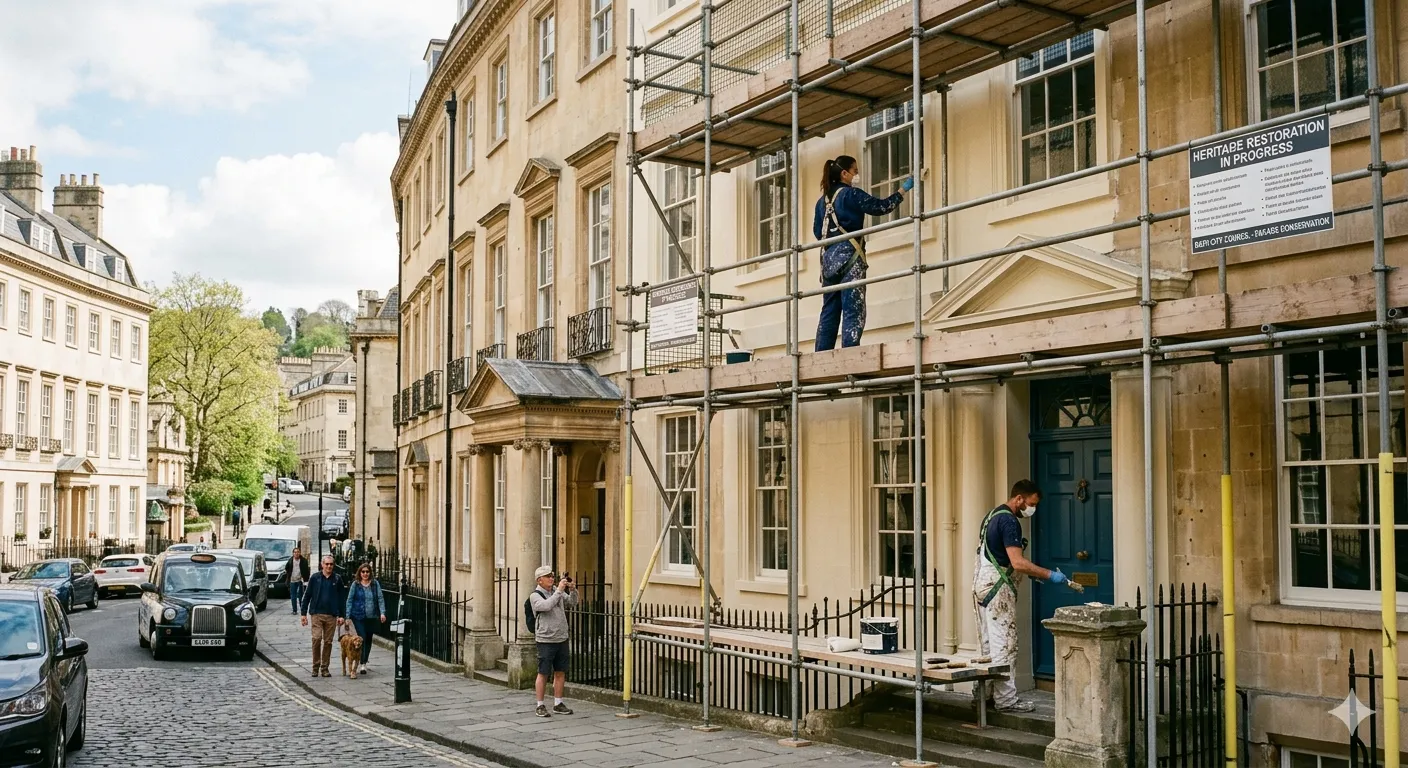
Heritage and Listed Building Decorating in Bath
Bath is a UNESCO World Heritage city, and much of its housing stock is historically significant. We are experienced heritage painters who understand the materials, techniques and sensitivities involved.
Arrange a ConsultationGeorgian Properties (1714–1837)
Bath's most famous housing stock — the Royal Crescent, the Circus, Great Pulteney Street, and smaller terraces across the city from Lansdown to Widcombe.
- Breathable limewashes and lime-based paints
- Restoration of panelled shutters and sash windows
- Period-appropriate distemper and flat oil paint on walls
- Replication of original colour schemes using archives and historic paint research
- Stencilling and decorative cornice restoration
Victorian Properties (1837–1901)
The Victorian expansion filled areas like Oldfield Park, Twerton and Larkhall. These homes often have elaborate cornices, high ceilings, dark woodwork and tiled fireplaces requiring careful masking and protection.
Edwardian and Later Period Homes
The early 20th century brought lighter colours, picture rails and dado rails. We match these sympathetic styles in areas like Combe Down and Bear Flat.
Listed Buildings and Conservation Areas
Many properties in Bath are listed or sit within conservation areas. We understand the restrictions on colour, materials and alteration. Where needed, we can liaise with Bath & North East Somerset Council's conservation officers on your behalf.
Materials We Use on Heritage Properties
- Lime-based products — breathable, flexible, compatible with historic fabric
- Traditional distemper and flat oil paints — authentic finishes for pre-20th-century interiors
- Lead-free alternatives — where original lead paint is present, we use safe, compliant removal methods
- Lining paper — stabilises cracked walls before decoration
Frequently Asked Questions
Heritage decorating questions from period property owners in Bath.